
Part 1: definition and strategies to adopt
Candidate experience has long been underestimated by companies and their recruiters. For a long time? It’s still often the case in many companies today. And yet, according to a study conducted by TalentPlug, 52% of candidates decline an offer due to insufficient candidate experience during the recruitment process.
In this article, I’m going to clarify things to help you see much more clearly!
What is candidate experience?
Let’s start with a simple definition: candidate experience represents all the interactions a candidate goes through during their recruitment process, from first contact to onboarding, or even after rejection.
But it’s essential to clarify what we mean by “recruitment process,” as this notion can vary from person to person. For some, the process begins at the first exchange with the candidate and ends with the contract signing. For others, it extends until they start the job, or even until the end of the probation period.
However, an often overlooked aspect is that candidate experience begins well before these formal stages. As soon as someone comes into contact with your brand – through your website, job postings, or even your social media posts – they’re already starting to form an opinion about you as a potential employer.
This completely changes the game: candidate experience isn’t limited to direct interactions. It encompasses everything, from the smoothness of the application journey to the clarity of communications, including the speed of feedback and respect for deadlines.
Of course, respectful exchanges, personalized feedback, and good listening skills are essential. But if your application process is long, poorly optimized, or lacks transparency, it can destroy all your efforts. Candidate experience is a continuous chain of interactions, and every link matters.
Concretely, this experience encompasses the entire candidate journey, from their first contact with your brand to their final onboarding or, sometimes, until they withdraw or are rejected for an opportunity. But even after rejection, the experience continues through nurturing actions, which help maintain a connection for future opportunities.
What should you implement to improve the candidate experience?
As you’ll have understood, the candidate experience isn’t just a simple exchange between a recruiter and a candidate. It’s built throughout the journey, at different key moments. It’s a proactive approach that requires organization and appropriate tools to maximize each interaction.
Here are several actions to implement to optimize each stage of the process.
1. Before a recruitment process
- Develop and communicate a strong employer brand: create an attractive and informative careers site. Highlight employee testimonials, unique videos about company culture, and information about the company’s values and mission. These elements help attract talent well before they become candidates.
- Optimize your social media presence: publish engaging and relevant content to showcase your internal dynamics and attractiveness as an employer. This ranges from posting job offers to concrete examples of company life, including an employee advocacy program, for example.
- Offer transparency about roles: publish precise and realistic job descriptions. Add testimonials from colleagues to give a human and authentic image of the team, responsibilities, and growth opportunities.
- Simplify access to job offers: ensure smooth and intuitive navigation on your careers site, particularly on mobile. An optimized candidate journey also means offers that are easy to find and apply for.
- Offer an assistance chatbot: a chatbot can answer candidates’ frequently asked questions and provide them with immediate help. If possible, opt for a real-time chat managed by humans to provide more personalized responses.
2. When applying
- Simplify the application process: limit mandatory fields in the form and allow LinkedIn profile integration to speed up applications. Candidates appreciate being able to apply in just a few clicks, without a laborious process.
- Optimize the mobile experience: your platform must be smooth and responsive on all devices, as a large number of candidates apply via their smartphone. Simplicity and user-friendliness are key success factors.
- Inform about the process: as soon as the application is submitted, clearly indicate the upcoming steps. How long before a response? What are the phases of the selection process? This reduces candidate anxiety and helps them manage their expectations.
- Send an automatic acknowledgment of receipt: as soon as a candidate applies, send a personalized email to confirm receipt of their application and inform them of the next steps. This shows that you respect their time and interest in the company.

3. During interviews
- Take care with the welcome: a good welcome, whether in person or virtually, is essential. Provide a clear briefing before the interview: location, times, contacts and tools. Show the candidate that they are expected and prepared for each interaction.
- Prepare recruiters and managers: train your teams to conduct inclusive and unbiased interviews. Using structured interviews and scorecards helps ensure fairness in candidate evaluation.
- Inform candidates: give them information about the objectives of each interview, the expected duration and the people they will meet. This allows the candidate to be prepared and feel comfortable.
- Be punctual and respectful: respect the times set for interviews and notify candidates in case of delay. Punctuality is a sign of respect and a good indicator of your company’s culture.
- Make interviews interactive: encourage candidates to ask questions and learn about the company. An interview should not be one-way, but a mutual exchange of information.
- Provide quick feedback: after each interview, provide constructive feedback, whether positive or negative. This shows that you value the time invested by the candidate.
4. After the interviews
- Transparent and prompt follow-up: communicate quickly with candidates after the interview. If the process takes time, keep them informed to avoid any frustration. No one likes being left in uncertainty.
- Provide detailed feedback: offer constructive feedback to candidates who weren’t selected. This helps them understand why their application wasn’t successful and gives them areas for improvement for the future.
- Ensure a final response to all candidates: never leave a candidate without a response. Even if the decision is negative, respecting the effort invested deserves clear final communication.
- Create a positive experience even in case of rejection: thank candidates for their interest and encourage them to apply again if another opportunity matches their profile. This leaves a positive image of your company.
5. During the probation period (for selected candidates)
- Organize structured onboarding: quality onboarding helps prepare the new team member for their responsibilities. Offer a training plan, goals to achieve, and team introductions so they feel integrated quickly.
- Provide personalized support: appointing a mentor or buddy helps new hires adapt to their new work environment.
- Stay attentive to the new team member: regularly collect their feedback and adapt your processes if necessary. Personalized follow-up promotes engagement.
- Schedule regular check-ins: set up regular meetings to assess progress and adjust responsibilities according to the team member’s skills and aspirations.
- Share the company’s vision: make sure the team member is well aware of the strategic objectives and company vision so they can align with them from the start.
6. For Rejected Candidates
- Offer constructive feedback: detailed and personalized feedback on strengths and areas for improvement helps candidates progress in their future endeavors.
- Maintain relationships with non-selected candidates: add them to your talent pool, offering them the opportunity to participate in events or stay informed about future opportunities through newsletters. This is what we call nurturing.
- Provide post-recruitment follow-up: for candidates who were rejected late in the process, offer follow-up or a coaching session to help guide their career.
- Request feedback: gather impressions from rejected candidates to understand how to improve your process.
- Encourage them to apply again: show candidates they’re welcome to apply for other positions that might better match their profile.
Trop long, pas lu ?
Le temps est une ressource précieuse. Obtenez les informations dont vous avez besoin en utilisant votre assistant IA préféré.
Ultimately, improving the candidate experience isn’t just about a few adjustments, but rather a comprehensive approach that touches every stage of the recruitment process.
However, as you can see, some actions remain relatively easy to implement. Moreover, each interaction and each moment is an opportunity to strengthen your employer brand and attract the best talent.
Finally, you may not have noticed, but there’s plenty here to delegate respective parts to your teams and offer them an enriching employee experience!
What Are the Benefits of a Good Candidate Experience?
The question many companies ask themselves: why invest in improving the candidate experience? Is it really necessary?
The answer is simple: yes, and there are numerous benefits to doing so. Improving the candidate experience isn’t just about making candidates happy. It has a direct impact on your brand, your internal processes, and even your company’s overall productivity. Not to mention that, of course, it gives you a significant competitive advantage.
Here are the main benefits:
- Improved company reputation: a good candidate experience strengthens your employer brand and improves the company’s perception among candidates, which naturally attracts more quality talent.
- Increased number of qualified applications: candidates who have a positive experience are more likely to recommend the company to other talents, thus expanding your candidate pool.
- Reduced recruitment costs: a more efficient process reduces hiring time and decreases turnover, which helps lower costs associated with recruitment and training.
- Retention of non-selected candidates: a candidate who wasn’t selected but had a good experience is more likely to apply again or become a brand ambassador, increasing the chances of future collaborations.
- Improved engagement of your new employees: a candidate who has had a positive experience throughout the hiring process is more engaged, motivated, and involved from day one at the company.
- Reduced dropout rate: an excellent experience reduces the risk of candidates withdrawing, as they feel valued and well-informed throughout the process.
- Time savings for recruiters: a well-designed recruitment process and clear communications allow recruiters to handle applications more efficiently and reduce administrative efforts.
- Better diversity management: an inclusive experience helps attract diverse talent, contributing to a better company culture and improved performance.
- Strengthened overall brand image: candidates, whether hired or not, share their experience with those around them. This can positively influence the company’s image not only among talent, but also among clients and partners.
- Trust and transparency: transparent processes strengthen candidates’ trust in the company, thus improving their perception of the employer brand.
- Competitive differentiation: in an increasingly competitive market, an excellent candidate experience becomes a competitive advantage for attracting the best talent against the competition.
- Reduced negative online reviews: disappointed candidates may share their negative experience on platforms like Glassdoor. A good experience reduces this risk and improves the company’s reputation.
- More accurate assessment of company culture: by interacting positively with the company throughout the process, candidates can better understand the company culture, which allows for better alignment of expectations.
In summary, providing an optimized candidate experience doesn’t just benefit your candidates, but your entire organization. It’s a strategic investment that delivers concrete and measurable returns in the long term.
Is there really any need to say more?
In the next part, I’ll explain which KPIs to implement to track the results of your efforts. Stay tuned!
Part 2: Which KPIs should you track?
In my previous article, I explained what candidate experience is, when it ends in your recruitment process, but most importantly, when it begins.
You’ve probably thought about how you could improve things in your process, having conducted a skillful audit of it.
Now, I’m going to explain how to measure your efforts with some interesting KPIs, then how Jarvi can become your most valuable partner in tracking these KPIs but above all, in the success of your candidate experience.
KPIs to track to measure your efforts

Now that you’ve implemented actions to improve the candidate experience, it’s crucial to measure their impact. How do you know if these efforts are paying off? Through relevant KPIs that will allow you to track and optimize each stage of the recruitment process.
Here are the most important KPIs to monitor:
- Conversion rate at each stage of the process
The conversion rate measures the percentage of candidates who move from one stage of the process to another, for example, from application submission to interview. This indicator helps identify friction points where candidates drop out or are eliminated, allowing you to adjust your methods and improve the fluidity of the recruitment process.
- Candidate satisfaction rate (NPS - Net Promoter Score)
The candidate NPS evaluates candidate satisfaction at the end of the recruitment process, whether they’re selected or not. Generally measured through a survey, this indicator is a direct reflection of the quality of the candidate experience. It helps identify aspects to improve in your management of candidate interactions.
- Average response time to candidates
The average response time measures the time elapsed between receiving an application and sending the first response to the candidate. Responsiveness is crucial for providing a good experience, as delays that are too long can frustrate candidates and push them to apply elsewhere. This indicator is essential for ensuring good time management.
- Average application processing time
The average processing time corresponds to the total duration between receiving an application and the final decision (positive or negative). A process that’s too long can lead to a loss of interest from candidates and harm your company’s image. This is an essential indicator for adjusting the duration of your processes.
- Time to hire
Time to hire corresponds to the total duration between the first interaction with a candidate and the acceptance of the job offer. It measures your company’s speed in recruiting after identifying a relevant candidate. An optimized time to hire means you’re limiting waiting times for talent and reducing the risk of losing quality candidates due to a slow process.
- Time to fill
Time to fill measures the time needed to fill a vacant position from when the offer is posted until a candidate accepts the position. This indicator helps you understand the overall speed of your recruitment process. A time to fill that’s too long may indicate a problem in your sourcing or selection processes.
- Candidate drop-off rate
The drop-off rate measures the percentage of candidates who voluntarily leave the recruitment process before its completion. A high drop-off rate can signal problems related to process clarity, the length of stages, or a lack of communication. This indicator helps you adjust the journey to reduce these drop-offs.
- Number of spontaneous applications
This KPI calculates the number of applications received without the company having actively posted an offer. It reflects the spontaneous attractiveness of your employer brand. The more spontaneous applications you receive, the more your company is perceived as an employer of choice, even without specific sourcing efforts.
- New hire satisfaction rate after probation period
This KPI measures the satisfaction of new employees at the end of their probation period regarding their recruitment experience. This allows you to verify whether the expectations created during recruitment match the reality of the position, which is crucial for long-term talent retention.
- Cost per hire
Cost per hire calculates the average expenses associated with each recruitment, including costs of tools, human resources, and marketing. Optimizing this cost while maintaining a quality candidate experience is essential to ensure the profitability of your recruitment process.
- New hire retention rate
The retention rate measures the percentage of new employees who remain with the company after a given period, such as 6 months or 1 year. A high rate indicates a successful candidate experience and a good match between the candidate’s expectations and the reality of the position.
- Diversity score of recruited candidates
This KPI measures the diversity of recruited profiles according to criteria such as gender, origin, or professional background. An inclusive candidate experience promotes diversity within your company and strengthens the richness of your teams.
- Re-engagement rate of rejected candidates
The re-engagement rate corresponds to the percentage of rejected candidates who reapply for other positions in your company. It shows that the rejection experience was positive enough for these candidates to consider coming back, an excellent indicator of the quality of your post-recruitment relationship.
- Feedback tool usage rate
This indicator measures how many candidates use the tools made available to give their feedback on the recruitment process (surveys, evaluations). A high rate shows that candidates feel heard, and that you’re taking their feedback into account to constantly improve the experience.
- New hire recommendation rate (eNPS - Employee Net Promoter Score)
The eNPS measures the likelihood that new hires will recommend the company to other candidates or friends. A good eNPS shows that onboarding was successful and that the candidate experience contributed to strengthening their engagement.
These KPIs give you an overview of what’s working and what can be improved in your recruitment process. By tracking these indicators regularly, you’ll be able to refine your practices, improve the candidate experience, and optimize your results. Don’t forget: start with a few key indicators before expanding your tracking as you make adjustments.
How Jarvi helps you with your candidate experience
You’re probably wondering how Jarvi can concretely help you improve your candidate experience.
Here are some of the features that make Jarvi a valuable partner in optimizing your recruitment process:
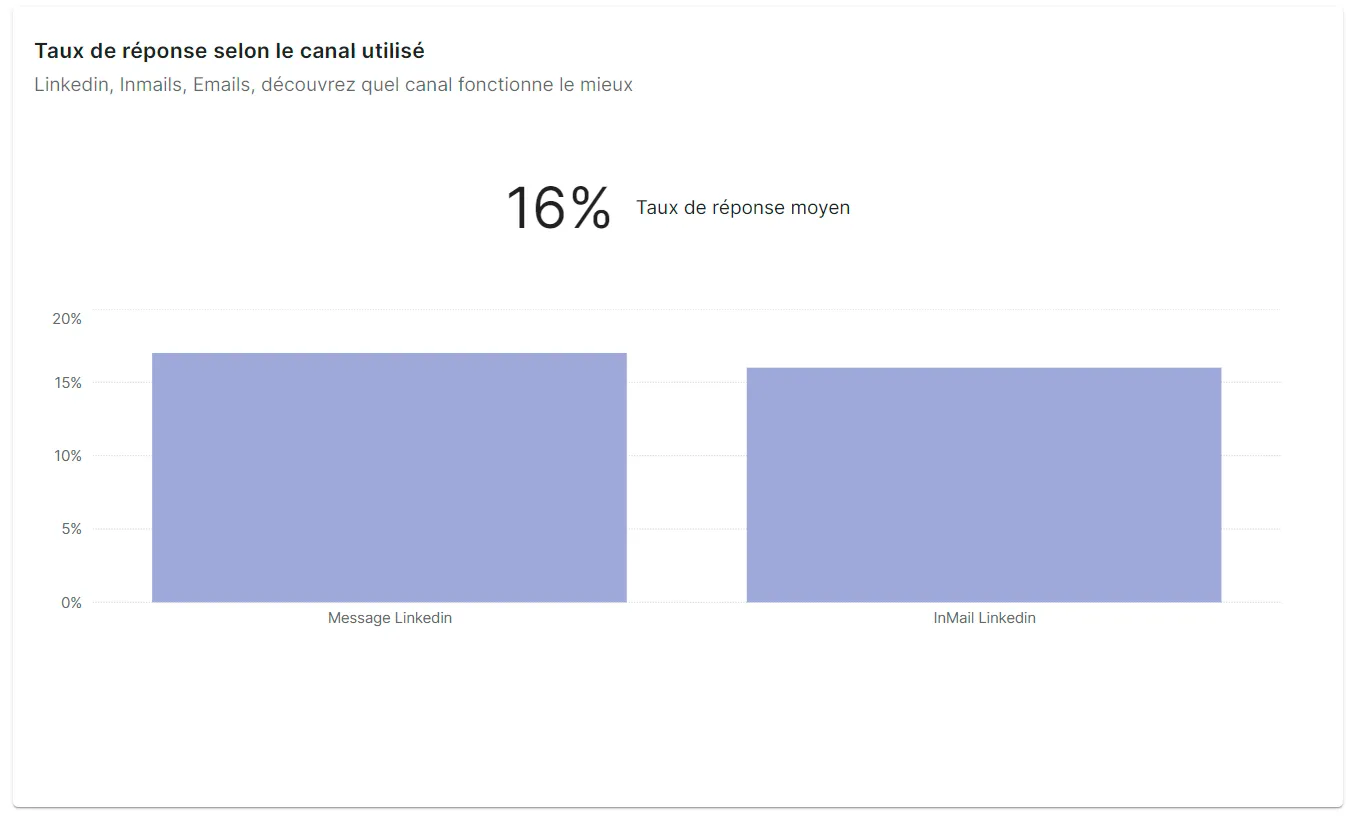
- Real-time KPI tracking: Jarvi allows you to monitor indicators like candidate response rate, conversion rate at each stage, and time-to-hire (time needed to finalize a hire). This way, you can adjust your process as you go and immediately see where you’re losing candidates.
- Real-time alerts for candidate messages: Jarvi notifies you as soon as a candidate sends a message, allowing you to respond quickly and avoid oversights. You stay constantly up to date, which improves responsiveness and the perception candidates have of your company.

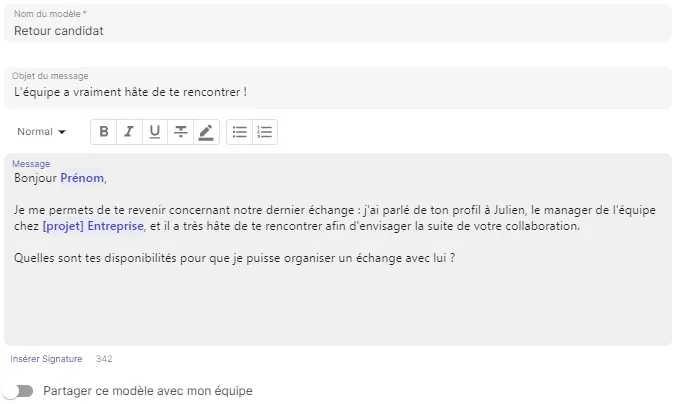
- Customizable communication templates: you can create message templates for each key stage of the recruitment process. This allows you to automate and personalize communications while maintaining a high level of quality in your exchanges with candidates.
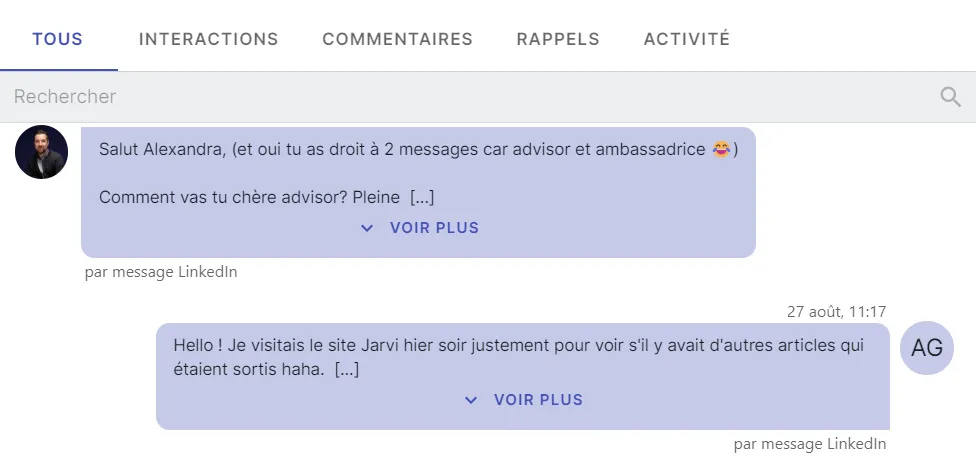
- Complete interaction history: with Jarvi, you have access to the complete history of exchanges with each candidate, allowing you to personalize your messages and track precisely where each application stands.
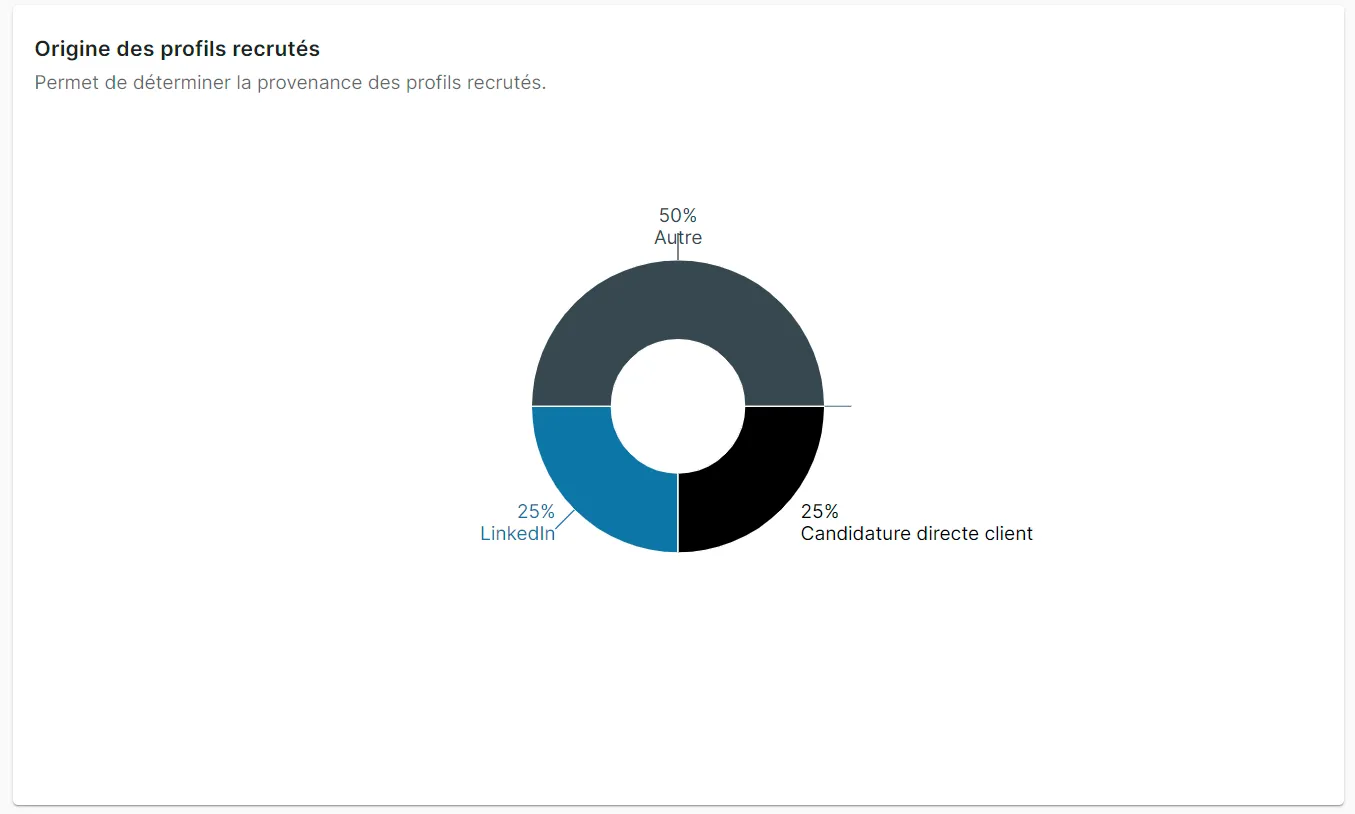
- Recruitment channel analysis: Jarvi helps you identify where your best candidates come from (social networks, job boards, referrals, etc.) and adjust your recruitment efforts accordingly.
- Nurturing non-selected candidates: Jarvi helps you stay in touch with non-selected candidates through nurturing campaigns you can set up—for example, by sending them information about future opportunities. This way, you can maintain a relationship with them, keep them informed about company developments, and encourage them to apply again later.
In conclusion, Jarvi gives you the tools you need to not only improve the quality of your recruitment process, but also to optimize every step of the candidate journey. This allows you to deliver an exceptional candidate experience and attract the best talent.
And to go further, you can discover how to use Jarvi for candidate nurturing by reading this article: How to use Jarvi for nurturing.
Related articles

The importance of candidate feedback: improving follow-up for a successful recruitment experience
Up to 62% of candidates say they never receive feedback after an interview. In a world where talent is increasingly in demand, offering feedback to candidates has become an essential element to stand out as an employer.

How to Use Jarvi to Nurture Your Candidates
Nurturing to attract and maintain candidate engagement throughout the recruitment process.

How AI Is Reshaping Recruitment Agencies in 2026
Sourcing, screening, prospecting, note-taking... Artificial intelligence is redefining every step of the recruiter's job. An overview of concrete use cases and measurable gains for agencies.