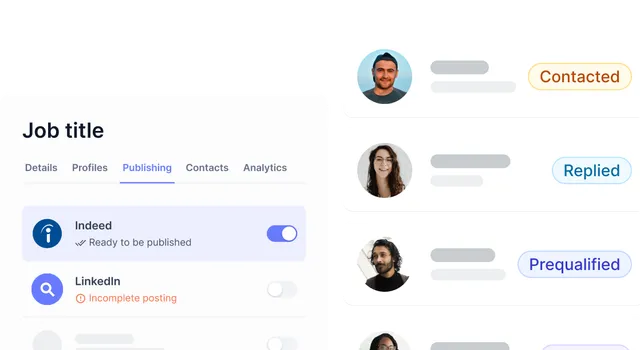


Is Loxo's sourcing engine worth the premium over Recruit CRM?

Feature by feature: sourcing and candidate data, automation and AI, pricing and value, and localization and support. Where each platform pulls ahead for a recruitment agency in 2026, and where both leave a gap.

Or meet the third option built for recruiters: Jarvi.

silhouette
Loxo logo
RecruitCRM logo

TL;DR

Positioning

Loxo fits agencies whose engine is proactive sourcing and want a built-in, enriched candidate database with contact data and native AI, and can absorb a premium, sales-led price. Recruit CRM fits agencies that recruit across borders and want an affordable, transparent all-in-one ATS and CRM with a multi-language interface and highly rated support.

Why it matters

Loxo is built around a talent-intelligence database enriched with contact information, a native email finder and the deeper native AI, while Recruit CRM answers with published pricing from $85, a roughly 10-language interface and support rated among the highest in the category. The split is clear: Loxo is the premium sourcing engine, Recruit CRM the affordable cross-border CRM.

The catch

Where both stop: neither runs a single outbound sequence across email, LinkedIn, WhatsApp, Telegram and SMS at once. Loxo can advance the pipeline on an email reply, but not across those channels, and Recruit CRM leaves the cadence to the recruiter.

At a glance

CriterionLoxoRecruitCRMEdge
Sourcing & candidate dataBuilt-in enriched database, email finderExtension capture, no email finderLoxo
Automation & AINative AI, reply detectionAI note-taking, lighter automationLoxo
Pricing & valueFrom $169, sales-led, premiumFrom $85, published, free trialRecruitCRM
Localization & supportMulti-language, praised support10 languages, top-rated supportRecruitCRM

Detailed technical comparison

Cross-analysis of tools: Sourcing, Data, and Pricing.

Comparison table: Loxo and RecruitCRM (ATS & CRM features)
LoxoRecruitCRM
Sourcing
1-click company importImport of companies with automatic data enrichment
1-click profile import via Chrome extensionA browser extension that adds a candidate to your ATS in one click, with their profile data
Professional Network SyncImport your professional network, with profile enrichment
External sourcing results importImport a sourcing project's pipeline, keeping its stages and metadata
External leads list importImport and sync prospect lists built outside the ATS
Legal data synchronization during importsSyncs company registration and legal identifiers (via Pappers or similar sources) during LinkedIn imports to maintain compliant, up-to-date client data
Email finder / contact discoveryFind verified email addresses for profiles on LinkedIn or other sites, allowing you to contact them directly
Automatic data completionAutomatically finds and adds missing data to profiles, such as a candidate's new job title, company logo, or company industry
AI & Automation
Outreach
ATS
CRM
Analytics
Integrations
Collaboration & UX
Data Security
Market proof
Support
Pricing
01

Loxo brings an enriched database and email finder, Recruit CRM captures profiles

LoxoRecruit CRMEdge: Loxo

Sourcing decides how much a recruiter retypes and how many candidates they can reach directly. The core question is whether the candidate data lives inside the platform or has to be captured from outside.

Loxo

Loxo is built around a talent-intelligence database: a large pool of candidates enriched with contact information, AI sourcing that surfaces matches, and a native email finder, so a recruiter can find and reach a candidate without leaving the platform. A Chrome extension captures profiles into the same system. The trade-off is LinkedIn: native messaging leans on a LinkedIn Recruiter integration, with no bulk LinkedIn import.

Recruit CRM

Recruit CRM sources through a one-click Chrome extension that imports a full candidate or company profile with parsing, which is fast and clean. But it has no built-in enriched talent pool and no native email finder, so contact discovery relies on what you capture or a third-party tool. For a team recruiting from inbound, referrals and its own base, that is enough; for heavy outbound sourcing, the missing database and email finder show.

Verdict. For a sourcing-first desk, Loxo's enriched database and native email finder remove far more manual work than Recruit CRM's capture extension. Recruit CRM expects you to bring the candidates. Neither offers bulk LinkedIn import.
02

Loxo runs the deeper native AI, Recruit CRM includes note-taking

LoxoRecruit CRMEdge: Loxo

The AI layer splits into capturing what happened and acting on it. Both include AI note-taking, but Loxo builds a deeper AI and automation set on top.

Loxo

Loxo ships the deeper native AI: an AI notetaker for calls and meetings, candidate scoring, AI sourcing and search, and reply detection that can advance the pipeline when a candidate answers over email. Automation covers stage-based campaigns and sequences with tracking. It is built into the platform, aimed at a data-driven sourcing team.

Recruit CRM

Recruit CRM includes AI note-taking for calls and meetings and a profile insight report, with automatic status updates and nurturing campaigns. Its AI scoring and rule-based automation are lighter than Loxo's, and there is no reply detection that advances the pipeline. The AI it includes is solid for an agency, just narrower than Loxo's.

Verdict. Loxo has the deeper native AI, including scoring and email reply detection. Recruit CRM matches on AI note-taking and keeps the rest lighter. Neither advances the pipeline across every channel.

03

Recruit CRM is affordable and published, Loxo is a premium buy

LoxoRecruit CRMEdge: Recruit CRM

Price and how you buy shape who each tool is for. Both publish an entry price, but they sit far apart on the number and the premium.

Loxo

Loxo starts at $169 per user per month on Basic and does not fully publish the rest, with professional contracts commonly reported between $250 and $400 per user per month depending on modules. The premium reflects the sourcing database and enrichment, but reviewers note that pricing lacks transparency. It rewards a firm that will use the sourcing engine enough to justify the cost.

Recruit CRM

Recruit CRM publishes its pricing: from $85 per user per month on Pro to $125 on Business and $165 on Enterprise, with a free trial. The tiers are clear and the entry point is accessible, so an agency can see the price and start without a long sales process. For a team that does not need a premium sourcing database, it is a fraction of Loxo's cost.

Verdict. For a firm that wants an accessible, published price, Recruit CRM is the easier buy. Loxo's premium is justified only when its enriched database and sourcing are central to how the desk works.

04

Recruit CRM speaks more languages and rates higher on support

LoxoRecruit CRMEdge: Recruit CRM

For an agency recruiting across borders, the interface language and the quality of support decide how quickly a team is productive. Both do well here, with a difference in degree.

Loxo

Loxo offers a multi-language interface and is praised for its interface and support, and it serves agencies internationally. Its center of gravity is the US and sourcing-led teams, and as the platform has grown, some reviewers report support wait times, though onboarding help is available. It is well supported, just not built primarily around a distributed, multi-language agency.

Recruit CRM

Recruit CRM runs a roughly 10-language interface and is built for agencies that recruit in more than 100 countries, with support and onboarding rated among the highest in the category (4.9 on Capterra, 4.8 on G2). Responsive support and fast onboarding are its most cited strengths, which suits a distributed international team.

Verdict. For a cross-border agency that values a multi-language interface and top-rated, responsive support, Recruit CRM leads. Loxo is well supported but built around sourcing-led teams rather than international breadth.

Pricing at a glance

per user / month

LoxoRecruitCRM
Entry$169 BasicATS, CRM, sourcing, analytics$85 Procore ATS and CRM
GrowthCustom Professionalreported $250 to $400, more modules$125 Businessemail sequencing, bulk texting
AdvancedCustom Enterprisecustom quote$165 Enterpriseautomation, analytics, enrichment
AI includedAI sourcing and candidate enrichment across plansAI note-taking and candidate matching on all tiers

Which fits which team?

Neither tool wins outright. The right pick comes down to whether your engine is proactive sourcing and you will pay a premium for it, or you want an affordable, multi-language agency CRM with great support.

Choose Loxo if:

  • Proactive sourcing is the core of your desk
  • You want a built-in, enriched candidate database with contact data
  • You want native AI: a notetaker, scoring and email reply detection
  • You want an email finder and tracked outreach built in
  • You can absorb a premium, sales-led price

Choose Recruit CRM if:

  • You recruit across borders and want a multi-language interface
  • You want published pricing from $85 with a free trial
  • You value highly rated, responsive support and fast onboarding
  • You want included AI note-taking and a one-click sourcing extension
  • You do not need a premium sourcing database

If neither profile fits cleanly, for example a team that wants exposed agentic AI, native multichannel sequences and EU data hosting at transparent pricing, it is worth widening the shortlist.

Jarvi: the third option that closes the gap Loxo and Recruit CRM leave open

Loxo runs a premium sourcing engine but stays email-centric on outreach; Recruit CRM keeps outreach around email with native SMS. Neither runs one sequence across email, LinkedIn, WhatsApp, Telegram and SMS that moves the pipeline from any channel.

Vs Loxo. Against Loxo, Jarvi runs those five channels together in one sequence at transparent, published pricing, instead of an email-centric engine behind a sales-led quote, with an AI copilot that suggests the next best action for each candidate.

Vs RecruitCRM. Against Recruit CRM, Jarvi goes past email-first outreach: the same cadence runs across five channels at once, and reply detection moves the pipeline instead of leaving the follow-up to the recruiter.

The Jarvi differentiator

The difference is AI reply detection that spans every channel. Loxo can act on an email reply; Jarvi reads replies across email, LinkedIn, WhatsApp, Telegram and SMS and moves the pipeline from any of them. A candidate answers with interest, Jarvi stops the sequence and alerts the recruiter. They reply 'not now', Jarvi schedules a six-month recall. They decline, the record is archived cleanly with its notes. That cross-channel automation takes hours of manual follow-up off each recruiter every week.

See Jarvi in a guided demo

About Loxo

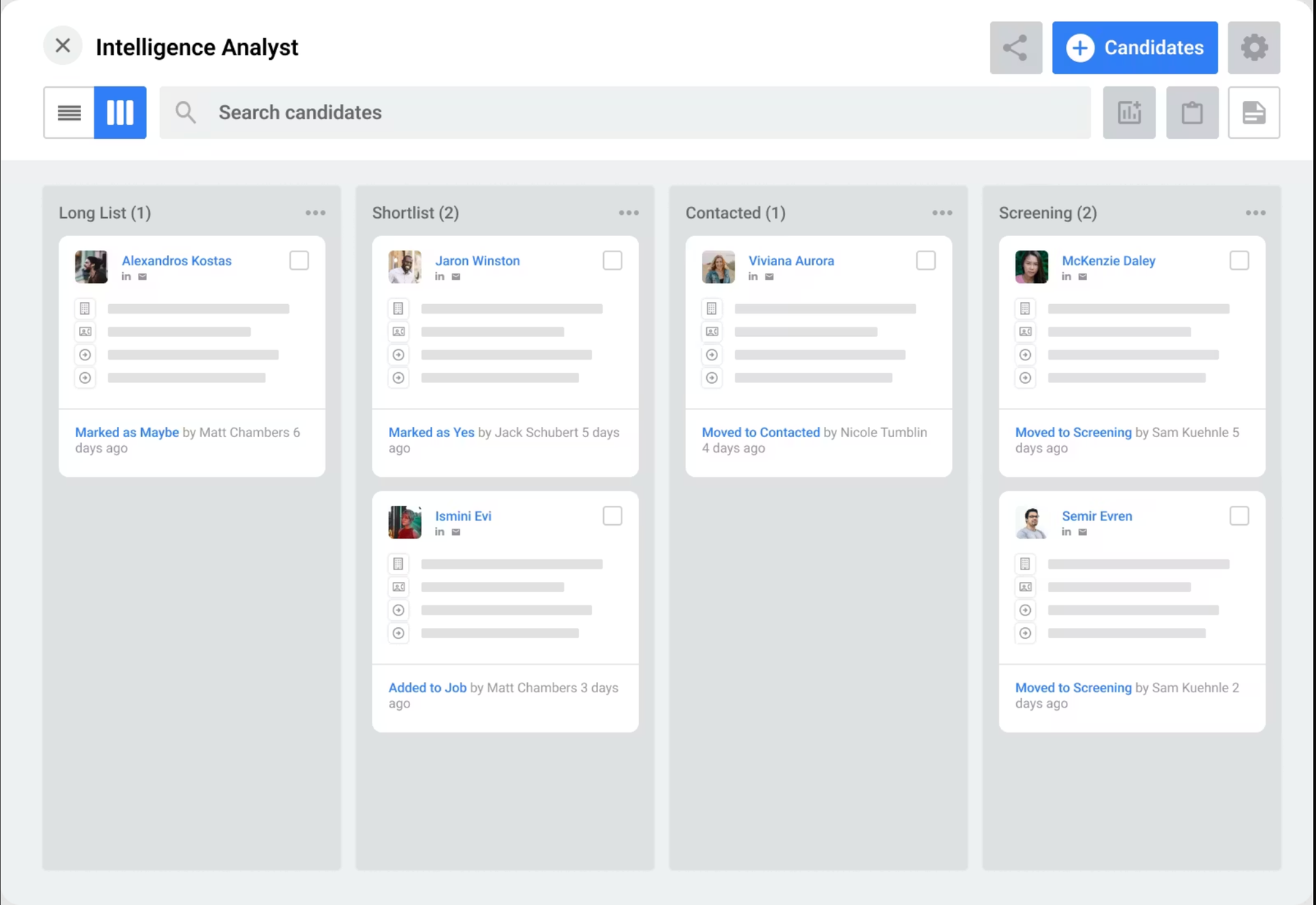
Loxo was founded in 2012 by Ilia Cheishvili and Matt Chambers in Denver and positions itself as a talent-intelligence platform: an ATS, a CRM and sourcing in one, built around a large candidate database enriched with contact information. It grew past $100M in revenue without outside funding, then took a $115M growth investment led by Tritium Partners in 2025 to accelerate its AI. Pricing starts at $169 per user per month on the Basic plan and is not fully published, with professional contracts commonly landing higher. It holds 4.6 on G2 and 4.6 on Capterra (about 126 reviews), praised for its interface and support. Its distinctive strength is built-in sourcing and enriched candidate data.

Loxo interface

About RecruitCRM

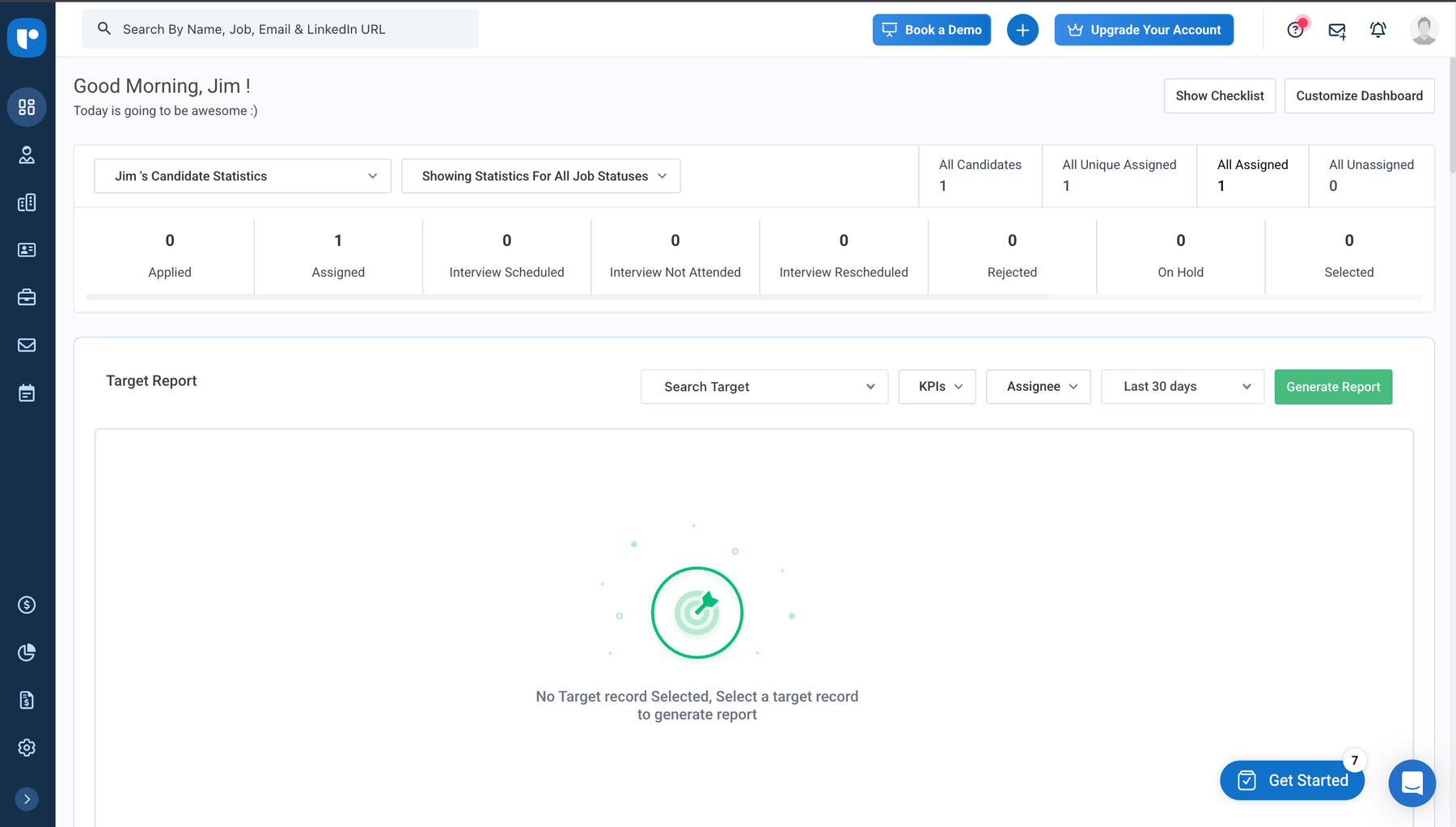
Recruit CRM was founded in 2017 by Sean (Shoanak) Mallapurkar and his father, starting in Pune, India. The company is bootstrapped, took no outside funding, and reports around $11M in annual recurring revenue. It is registered in the US (New Jersey) and runs as a remote organization with teams in India, Dublin and Dubai, serving recruitment and staffing agencies in more than 100 countries. Recruit CRM is an all-in-one ATS and CRM aimed at agencies that recruit across borders, with AI note-taking, a one-click sourcing extension and a roughly 10-language interface. It holds 4.9 on Capterra (about 464 reviews) and 4.8 on G2 (about 94 reviews), among the highest in the agency ATS category. Its distinctive strength is fast onboarding and responsive customer support.

RecruitCRM interface

FAQ: Loxo vs RecruitCRM

This comparison guide analyzes the critical differences between Loxo and RecruitCRM: pricing policy, free trial, customer support quality, and sourcing power. Use this data to choose the best-fit ATS for your agency.

Hero Image Mobile
alternative logo
logo

Ready to switch to Jarvi?

Join hundreds of agencies that made the switch to Jarvi. Book a demo to see how we can help you recruit better, faster, and more affordably.

Jarvi app screenshot

Loxo analyzed on December 17, 2025 — If you have any updates or corrections to share, please help us keep this article accurate and up-to-date via the chat in the bottom right corner.